Black Rose Thorny Vine Vector Illustration
A Designer’s First Look: Mysterious, Sharp, and Ready for Stitching
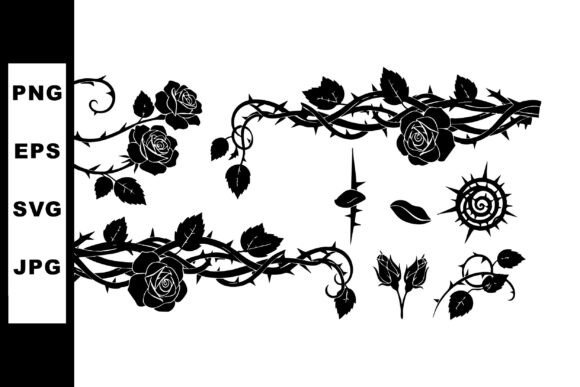
When I opened Black Rose Thorny Vine Vector Illustration, my first thought wasn’t “pretty”—it was “present.” This isn’t a dainty floral. It’s a moody, tightly composed vine with dramatic negative space, sharp thorn points, and layered petals that suggest depth without clutter. The black rose sits center-frame but doesn’t dominate; instead, the thorny vine winds organically—curling, tapering, and breathing across the canvas. As an embroidery designer who tests hundreds of illustrations yearly, I immediately saw its potential: not as filler, but as a signature motif for clients who want elegance with edge.
Real Project Test: Embroidering It on a Linen Tote Bag
Last week, I used Black Rose Thorny Vine Vector Illustration to embroider a medium-weight natural linen tote for a boutique client launching a small collection of apothecary-style goods. Why this design? Because it holds visual weight at 4.5" wide—large enough to read clearly, small enough to avoid overwhelming the fabric. The thorns landed crisply in satin stitch, the rose petals held dimension with subtle fill stitch variation, and the vine’s thin trailing ends translated cleanly into running stitch without fraying or stitching out. Customers responded strongly—not just to the “goth garden” vibe, but to how *intentional* it felt. That’s the difference between decorative graphics and functional embroidery design assets.
Where It Shines (and Where It Asks for Extra Care)
Black Rose Thorny Vine Vector Illustration excels in projects where mood and craftsmanship align:
- Custom apparel: Works beautifully on sweatshirt cuffs, back yokes, or sleeve accents—especially on mid-to-heavy fabrics where stitch definition stays sharp.
- Embroidered patches: Its clean outlines and balanced density make it ideal for sew-on or iron-on patches meant for jackets, backpacks, or denim aprons.
- Baby embroidery: Surprising but effective—when scaled down to 2.75" and stitched in soft matte thread on organic cotton onesies, the thorns soften visually while retaining character (just avoid placement near hems or seams where friction could wear delicate details).
- Holiday and wedding gifts: Paired with charcoal or deep burgundy thread on ivory tea towels or velvet pillow covers, it reads as heirloom-quality—not trendy, but timeless.
- Etsy listings and small shop products: As a digital embroidery file, it stands out in search results because it bridges niche aesthetics (dark botanical, gothic decor) with broad usability (apparel, home, accessories).
But—and this matters—it’s not universally forgiving. Use caution on:
- Stretchy or thin fabrics like jersey or voile: The fine thorn tips and tight petal edges may pucker or distort without proper cutaway stabilizer and reduced stitch density.
- Curved surfaces like caps or baby bonnets: The vine’s linear flow works best on flat or gently contoured areas. Avoid wrapping it fully around a crown seam—test placement on a mockup first.
- Dark fabric with dark thread: While elegant in theory, low contrast can mute detail. Try charcoal thread on navy or deep plum thread on black for richer dimension.
- Small hoop sizes under 4": Some inner vine junctions and petal overlaps tighten at tiny scales—verify clarity in your embroidery software before committing to production.
What It Adds to Your Finished Product—Beyond Aesthetics
This isn’t just about how Black Rose Thorny Vine Vector Illustration looks stitched—it’s about what it communicates. When customers see that precise thorn line or the way the vine curls *into* the fabric grain rather than sitting flat on top, they subconsciously register care, intention, and skill. That builds trust—especially for handmade product buyers who pay premiums for authenticity. For Etsy sellers, it elevates perceived value without raising price points. For craft fair vendors, it sparks conversation (“Is that hand-drawn?” “Do you do custom versions?”). And for boutique branding? It adds cohesion—imagine it subtly repeated on tags, packaging stamps, or even as a watermark on printable mockups.
Practical Notes Every Embroidery Designer Should Check
Before stitching Black Rose Thorny Vine Vector Illustration into your next project, run through these real-world checks:
- Test on scrap fabric—same weight, same weave, same stabilizer combo you’ll use in production.
- Review stitch density in your editing software. Dense fill areas near the rose center may benefit from slight underlay reduction to prevent stiffness.
- Confirm hoop size compatibility. If your machine uses smaller hoops, verify whether the design fits comfortably—or if minor repositioning preserves integrity.
- Inspect small details at 200% zoom: thorn tips, leaf veins, and petal separations should remain distinct, not merged or jagged.
- Mock it up in black and white first—this reveals contrast issues faster than color previews.
- Compare light vs. dark backgrounds using fabric swatches, not just screen previews.
- Use appropriate stabilizer: medium cutaway for knits, tear-away for stable wovens, and optional topping for napped fabrics like terry cloth.
- Verify licensing before selling finished items or bundling the file with digital products—this is a Graphics asset, not automatically commercial-use by default.
Final Thought: Not Just an Illustration—A Design Decision
Black Rose Thorny Vine Vector Illustration isn’t background noise. It’s a deliberate visual statement—one that asks you to consider context, audience, and execution before pressing “start.” That’s why it lands so well in high-intent projects: personalized gifts, boutique merchandise, and custom apparel where every stitch carries meaning. If your work values atmosphere *and* precision—if your customers choose handmade because it feels human, not algorithmic—then this illustration earns its place in your active design library. Just remember: respect its sharpness, honor its mood, and always test before you commit.