Open Book and Floral Book Vector: Graphics & Illustrations
First Impression: A Gentle, Storytelling Silhouette
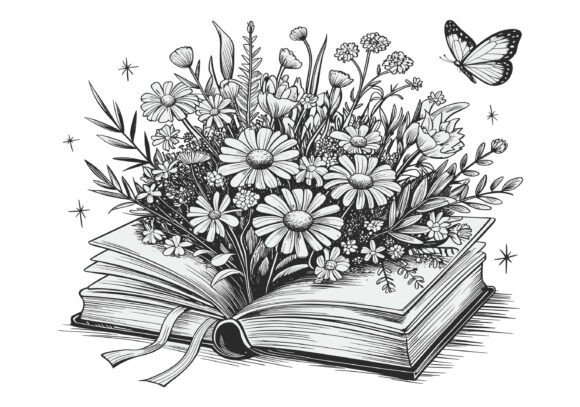
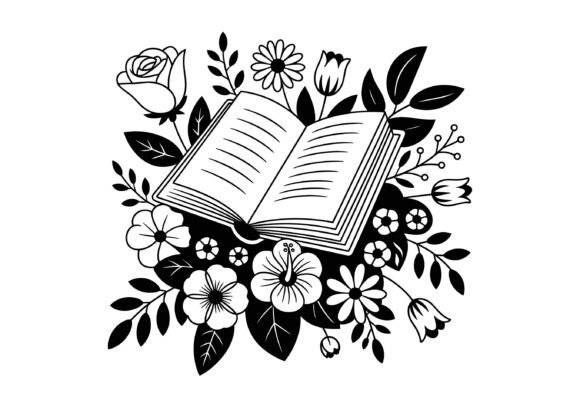
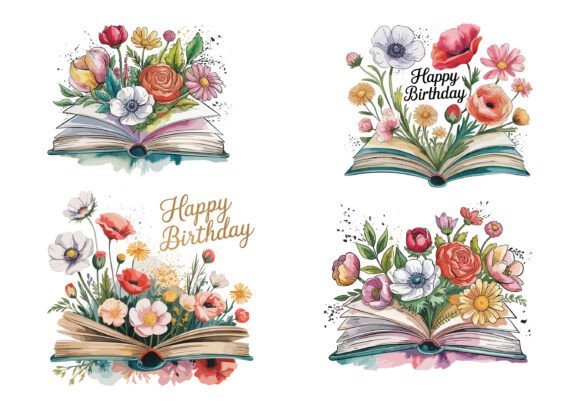
When I opened Open Book and Floral Book Vector, my immediate reaction wasn’t “pretty” — it was “resonant.” This isn’t a busy floral explosion or a rigid textbook icon. It’s an open book outline — soft, balanced, slightly asymmetrical — with delicate botanical elements blooming from its pages like ideas taking root. The linework feels intentional: clean enough for modern design, organic enough to support handmade business branding. It lands squarely in that sweet spot between editorial illustration and decorative graphic design asset — warm but not cloying, minimal but not sterile.
A Real Project Fit: Launching a Local Indie Bookshop’s Spring Collection
I’m currently developing the visual identity for “Hearth & Page,” a small-batch indie bookstore launching a seasonal line of locally authored chapbooks, herbal tea blends, and hand-bound journals. Their voice is thoughtful, grounded, quietly poetic — not academic, not twee. Open Book and Floral Book Vector instantly clicked as a unifying motif. It mirrors their ethos: knowledge unfolding, growth emerging from stories, quiet reverence for craft. Used across packaging design, Instagram posts, and printable event posters, it adds cohesion without dictating tone — a rare strength in a single illustration.
Where It Shines in Client Work
- Product mockups: Especially for journals, notebooks, and ceramic mugs — the silhouette scales beautifully and reads clearly against textured backgrounds.
- Social media graphics: Works powerfully in Pinterest pins and Instagram carousels where mood and theme matter more than fine detail. Paired with serif or gentle script fonts, it elevates blog visuals and Canva templates instantly.
- Printable design & wall art: As a standalone SVG design or high-res PNG, it holds crispness at large sizes — ideal for Etsy printables or framed shop signage.
- Cricut project & sticker design: Clean vector paths mean effortless cut lines. Perfect for vinyl decals on tote bags, bookish laptop stickers, or layered paper crafts.
- Brand identity accents: Not as a primary logo (too illustrative), but as a supporting brand element — watermarking, pattern base, or chapter divider in digital product guides.
Where to Use It Thoughtfully
This isn’t a universal utility player. Its charm lies in its specificity — so context matters. Avoid using Open Book and Floral Book Vector in:
- Small-scale applications like favicon icons or tiny app UI elements — subtle floral details vanish, leaving only vague shape.
- Crowded layouts or complex backgrounds — it needs breathing room to read as intentional, not cluttered.
- Corporate or highly technical branding — its warmth and organic flow can undermine perceptions of authority or precision.
- Minimalist branding systems built on stark geometry — it introduces softness that may clash with rigid grid structures or ultra-thin sans serifs.
How It Shapes Perception & Performance
In real client work, this illustration does heavy emotional lifting. It signals approachability, creativity, and care — qualities that boost visual trust for handmade business audiences. When placed beside handwritten font or natural textures, it strengthens audience engagement by reinforcing narrative and authenticity. But it also affects hierarchy: used too prominently alongside body text, it can compete for attention. I always test it next to the actual typeface pairings — it harmonizes best with serif fonts (for gravitas) and gentle script fonts (for warmth), but often overwhelms bold display fonts or tight sans serifs.
Practical Designer Notes Before You Commit
- Test in black and white first — does the balance hold? Does the flower integration feel cohesive, not tacked-on?
- Preview on both light and dark backgrounds. Check PNG transparency if included — no stray pixels or fuzzy edges.
- Scale it down to 40px and up to 2000px. Does the vector remain crisp? Are anchor points manageable for editing in Illustrator or Affinity Designer?
- Drop it into a real product mockup — a journal cover, a mug, a fabric swatch. Does it enhance or distract?
- Run a print test. Does the floral detail hold on matte paper? Sublimation design output? Some versions lose subtlety in heat-transfer workflows.
- Confirm commercial license terms — especially for print-on-demand sellers and digital product creators. Is redistribution allowed? What about derivative works?
Final Verdict: A Purpose-Built Creative Asset
Open Book and Floral Book Vector isn’t filler clipart. It’s a considered illustration — one that earns its place in editorial design, small business branding, and tactile product launches. It performs well as a digital product, a printable design, and a flexible SVG design across platforms. For designers building visual language around storytelling, learning, wellness, or artisanal craft, it’s a reliable, emotionally intelligent addition to the design assets toolkit. Just remember: its strength is intentionality, not ubiquity. Use it where it tells a story — and let it rest where silence speaks louder.