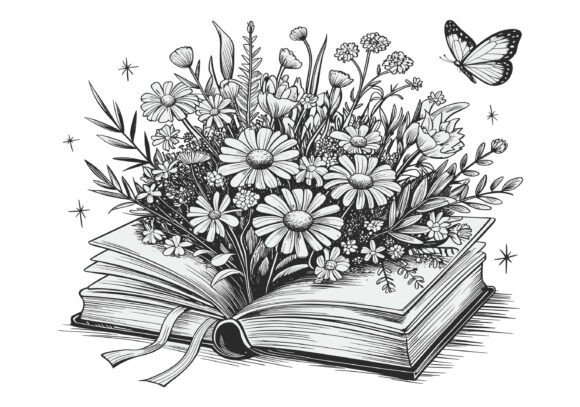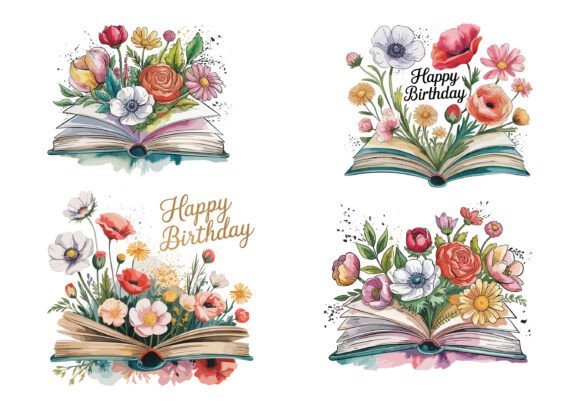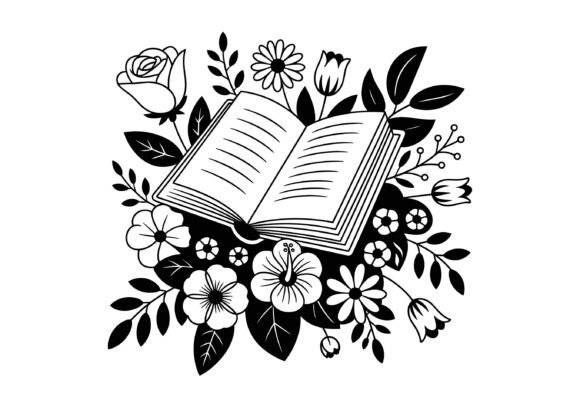
Open Book Silhouette with Flower Vector Graphics
First Impression: Warm, Thoughtful, and Visually Calm
When I opened the Open Book Silhouette with Flower Vector for the first time, my immediate reaction wasn’t “pretty”—it was “trustworthy.” That’s rare for a decorative illustration. The balance between the open book’s clean, symmetrical silhouette and the organic, asymmetrical bloom creates quiet confidence—not loud, not trendy, but deeply resonant with audiences who value authenticity and intention. It reads as modern design with soul: ideal for small business branding, online coaches launching signature courses, or publishers building editorial campaigns around growth, learning, or mindful creativity. It doesn’t scream “sale” — it whispers “pause, reflect, grow.” That emotional tone makes it especially effective for lifestyle content, seasonal offers (think spring launches or back-to-school wellness bundles), and lead magnets like printable journals or guided reflection kits.
Where This Graphic Design Asset Earns Its Place in Real Campaigns
I recently used the Open Book Silhouette with Flower Vector to refresh the visual identity of a client launching a digital product: a 6-week self-paced writing course for creative entrepreneurs. We needed marketing visuals that felt grounded—not flashy—and communicated depth without academic stiffness. The Floral Open Book Outline Vector became our anchor across touchpoints: resized cleanly as a watermark on blog graphics, layered subtly behind headlines in email banners, and scaled elegantly on Canva templates for Instagram carousels. Because it’s an SVG design, we preserved crisp edges at every size—critical for web design and digital ads where pixelation erodes audience trust. As a PNG design, it performed flawlessly on Pinterest pins and Facebook ads, especially against soft neutral backgrounds. It also translated beautifully to packaging accents: printed in muted terracotta ink on kraft paper inserts for physical workbooks, reinforcing brand consistency without overwhelming the copy.
Marketing Uses Where It Delivers Strong ROI
- Branded templates: Works seamlessly in Canva templates for social media graphics, email headers, and content bundles—especially when paired with serif fonts for editorial warmth or clean sans serifs for modern clarity.
- Pinterest & blog graphics: Its balanced negative space supports strong visual hierarchy, letting headlines and CTAs shine without competing clutter.
- Digital product visuals: Enhances perceived value of e-guides, printable designs, and digital courses by signaling care, craftsmanship, and thematic cohesion.
- Editorial design & media kits: Adds quiet sophistication to press releases, speaker one-sheets, and brand story decks—no stock-photo sterility.
- Merchandise & stickers: Scales down gracefully for die-cut vinyl stickers and minimalist tote bags—ideal for creative marketplaces and pop-up events.
Where Caution Is Essential
This isn’t a universal plug-and-play asset. Avoid using the Open Book Silhouette with Flower Vector in formal corporate branding (e.g., law firm websites or B2B SaaS dashboards), where its floral softness may dilute authority. It also struggles in dense information layouts—like comparison tables or multi-step infographics—where its decorative nature competes with function. On low-contrast backgrounds (e.g., light gray on off-white), test legibility carefully; the delicate petal lines can fade. And while it pairs beautifully with script fonts for handwritten charm, avoid pairing it with overly ornate display fonts—it’s a supporting actor, not the headline.
Brand Designer Notes You’ll Actually Use
- Test with your palette: Try it in your primary brand color, then in black and white—some floral details vanish in monochrome unless the vector is well-structured (this one holds up).
- Mock it up: Drop it into real campaign mockups—website headers, Instagram Story frames, and email preview panes—to assess balance and breathing room.
- Mobile-first check: Zoom to 30% on your phone screen—does the flower remain legible? Does the book spine stay distinct? (It does—thanks to smart stroke weight.)
- Font chemistry test: Run quick pairings: Lora (serif) for elegance, Inter (sans serif) for clarity, Playfair Display (display) for impact, and Caveat (script) for approachability. All work—but each shifts the mood.
- Licensing verification: Confirm commercial license before use in paid ads, client deliverables, or digital product sales—this is a commercial design, not clipart.
Why This Illustration Builds Audience Trust—Not Just Aesthetics
In a feed saturated with AI-generated sameness, the Open Book Silhouette with Flower Vector stands out because it feels *designed*, not generated. Its thoughtful proportions and intentional negative space signal professionalism—subtly telling your audience, “We invest in craft.” That perception directly boosts audience trust and strengthens recognition across platforms. When reused consistently—as a recurring decorative element in blog sidebars, email footers, or packaging accents—it becomes a quiet signature, reinforcing brand identity without repetition fatigue. For bloggers, online coaches, and small business owners, that consistency is gold: it transforms scattered visuals into a cohesive content marketing ecosystem. And because it’s rooted in universal symbols—the book (wisdom, narrative) and the flower (growth, renewal)—it bridges demographics, appealing equally to educators, wellness creators, and literary brands.
Final Verdict: A Strategic Design Asset, Not Just Decoration
The Open Book Silhouette with Flower Vector isn’t just another illustration—it’s a versatile, emotionally intelligent graphic design asset built for real-world branding demands. Whether you’re designing a launch sequence for a digital product, refreshing your social media graphics, or building a printable design bundle for Etsy, this vector delivers clarity, calm, and quiet authority. It supports stronger first impressions, cleaner visual hierarchy, and more memorable campaign visuals—all while staying true to handmade, lifestyle, and knowledge-based brand values. If your goal is professional branding that breathes, connects, and endures, this is one of those rare design assets that earns its place—not just in your library, but in your strategy.